Bulgarian Family Code: marriage, property regimes, divorce
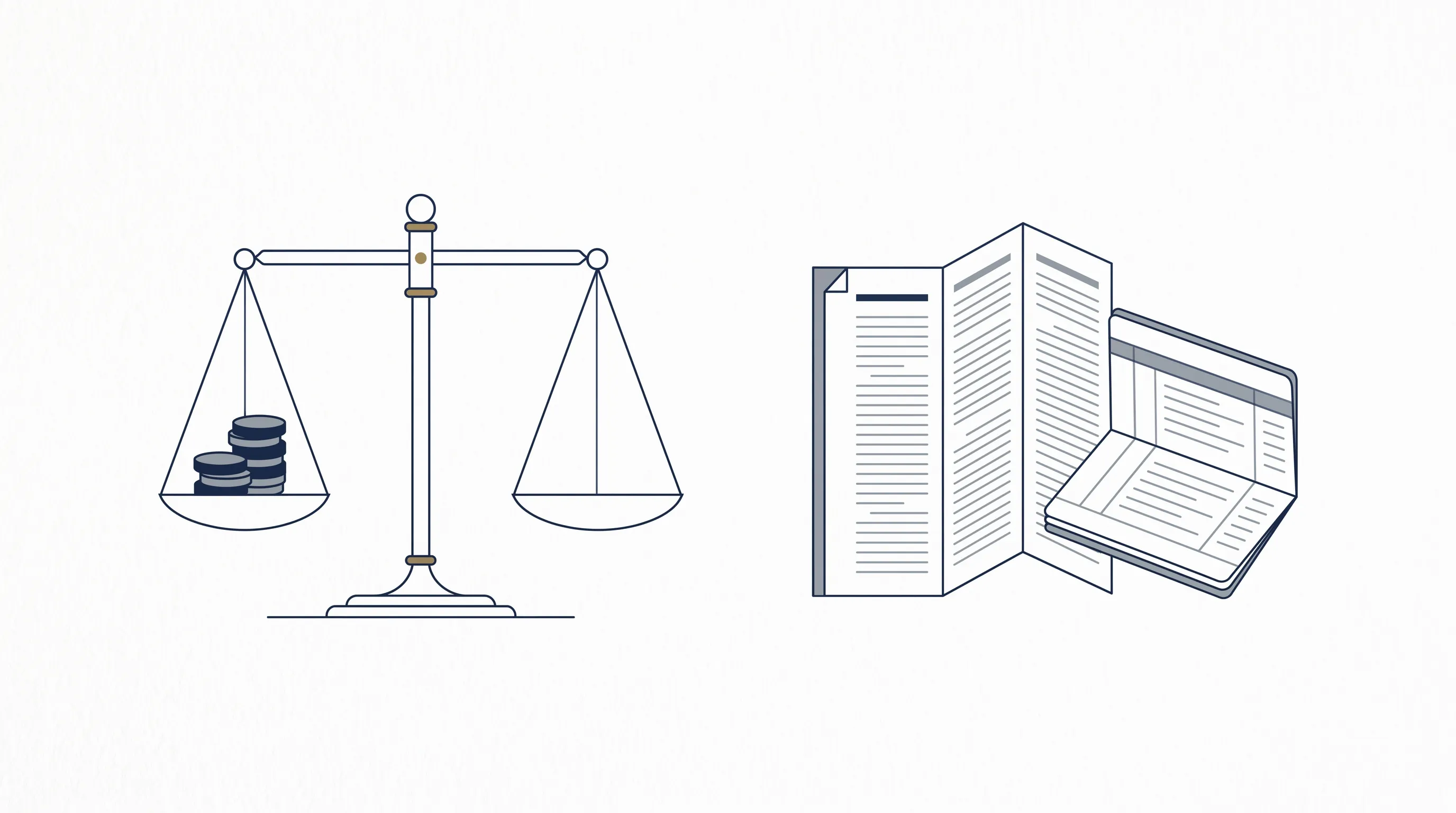
A map of Bulgaria's Family Code (12 chapters, 176 articles): marriage, the three property regimes, marriage contracts, divorce, adoption, maintenance.
Nobody reads the Family Code from beginning to end. In practice you enter it through one specific question: who owns an item acquired during the marriage, how far a marriage contract goes, what exactly is submitted in a divorce by mutual consent. The problem is that the answer almost always sits at the intersection of two or three chapters, and the bare text of the Code does not show those links.
This review organises the whole Code in force as a working map: what each chapter regulates, which provisions carry the practical weight and where the text has changed with the reforms of 2023 and 2025. The provisions cited are reproduced verbatim from the consolidated version up to State Gazette (ДВ) No. 115 of 30 December 2025.
❓What does the Family Code regulate, and what is the version in force?
Source: СК, Art. 1
12 chapters
structure of the Code, from the general provisions to the administrative penalty provisions
1 October 2009
date from which the Code in force applies (promulgated in ДВ No. 47/2009)
30 December 2025
last amendment and supplement (ДВ No. 115/2025)
Scope, structure and the version in force
The subject matter of the Code is outlined very briefly, and this matters in disputes about applicability: Art. 1 identifies the four main groups of relations that the Code regulates directly.
Family Code (СК)
Art. 1
Official Bulgarian text
„Семейният кодекс урежда отношенията, основани на брак, родство и осиновяване, както и настойничеството и попечителството.“
The arrangement follows the life chronology of the legal relationship. First comes the conclusion of the marriage and its content, then its termination, and only then the relations between parents and children. Maintenance (издръжка) has its own separate chapter, which in practice means that in a divorce case you work with Chapter Five, Chapter Nine and Chapter Ten at the same time when there are minor children.
| Chapter | Subject | Key provisions |
|---|---|---|
| One | General provisions | Art. 1-3 |
| Two | Conclusion of marriage | Art. 4-12 |
| Three | Personal relations between spouses | Art. 13-17 |
| Four | Property relations between spouses | Art. 18-43 |
| Five | Termination of marriage | Art. 44-59 |
| Six | Descent (parentage) | Art. 60-73 |
| Seven | Kinship | Art. 74-76 |
| Eight | Adoption | Art. 77-121 |
| Nine | Relations between parents and children | Art. 122-138б |
| Ten | Maintenance | Art. 139-152 |
| Eleven | Guardianship and curatorship | Art. 153-174 |
| Twelve | Administrative penalty provisions | Art. 175-176 |
Map of the Family Code in force
Conclusion of marriage: conditions and impediments
Only a civil marriage concluded in the form required by the Code has legal effect. A religious ceremony has no legal effect. The age of marriage is now uniform, with no exceptions.
Family Code (СК)
Art. 6(1)
Official Bulgarian text
„Брак може да сключи лице, навършило осемнадесет години.“
The exception for minors has been removed
Paragraphs 2, 3 and 4 of Art. 6, which allowed marriage at the age of sixteen with the court’s permission, were repealed by ДВ No. 106 of 2023, in force from 22 December 2023. The version in force provides no exception to the age in paragraph 1.
A breach of Art. 7 makes the marriage voidable (унищожаем), not void (нищожен): the marriage takes effect until it is annulled by court action within the time limits and by the persons named in Art. 47. For some of the grounds the Code provides that the marriage ceases to be voidable, for example in the case of bigamy, if the earlier marriage has been terminated, or in the case of an illness under Art. 7(1), item 3, if the ill spouse has recovered (Art. 47(2) and (5)).
Family Code (СК)
Art. 7(1)
Official Bulgarian text
„Не може да сключи брак лице, което: 1. е свързано с друг брак; 2. е поставено под пълно запрещение или страда от душевна болест или слабоумие, които са основание за поставянето му под пълно запрещение; 3. страда от болест, представляваща сериозна опасност за живота или здравето на поколението или на другия съпруг, освен ако той знае за тези болести.“
Property relations: the three regimes
The Code allows a choice between three property regimes, one of which is agreed by contract. The statutory regime of community of property applies when no choice has been made.
Family Code (СК)
Art. 18
Official Bulgarian text
„Режимите на имуществените отношения между съпрузите са: 1. законов режим на общност; 2. законов режим на разделност; 3. договорен режим. (2) Законовият режим на общност се прилага, когато встъпващите в брак не са избрали режим на имуществените си отношения, както и ако са непълнолетни или ограничено запретени.“
The choice and any later change are registered in the central electronic register of property relations at the Registry Agency (Агенция по вписванията) under Art. 19, and the register is public (Art. 19(4)). A search of it is the first step in any transaction involving a spouse, because the Code expressly regulates what happens when there is no entry.
Family Code (СК)
Art. 20
Official Bulgarian text
„При сделка между единия или двамата съпрузи с трето лице, когато в регистъра няма вписан режим на имуществени отношения, се прилага законовият режим на общност.“
| Criterion | Community | Separation | Contractual |
|---|---|---|---|
| How it arises | By default, without a choice | By express choice at the time of the marriage or during it | By a marriage contract |
| Property acquired during the marriage | Joint where there is a joint contribution (Art. 21) | Personal to the spouse who acquired it (Art. 33(1)) | As agreed (Art. 38) |
| Disposal of real estate | Jointly by both spouses for jointly owned property (Art. 24(3)) | As a rule by the owner; for the family home Art. 26 applies (Art. 34) | As agreed and subject to the mandatory rules of the law |
| Settlement on termination of the marriage | Shares under the rules of the community | A claim for part of the value only where the marriage is terminated by court action (Art. 33(2)) | As agreed |
| Liability for the family's needs | Joint and several (Art. 32(2)) | Joint and several for current needs (Art. 36(2)) | Participation and obligations are agreed |
The three regimes under Art. 18(1) СК
Statutory community of property: what goes in and what stays personal
The community covers property rights acquired through a joint contribution. The substantial procedural weight is in paragraph 3: the contribution is presumed, which shifts the burden of proof onto the person challenging it.
Family Code (СК)
Art. 21
Official Bulgarian text
„Вещните права, придобити по време на брака в резултат на съвместен принос, принадлежат общо на двамата съпрузи, независимо от това на чие име са придобити. (2) Съвместният принос може да се изрази във влагане на средства, на труд, в грижи за децата и в работа в домакинството. (3) Съвместният принос се предполага до доказване на противното.“
The counterpart is personal property. What was acquired before the marriage, and what was acquired during the marriage by inheritance or gift, remains personal regardless of the length of the marriage.
Family Code (СК)
Art. 22(1)
Official Bulgarian text
„Вещните права, придобити преди брака, както и придобитите по време на брака по наследство и по дарение, принадлежат на съпруга, който ги е придобил.“
To this is added the conversion of personal property under Art. 23: property rights acquired during the marriage entirely with personal property are personal, and where personal property was only partly used, the corresponding part is personally owned, unless it is insignificant.
Disposal is where the most disputes with third parties arise. The regime differs according to the type of asset.
Family Code (СК)
Art. 24(3) and (4)
Official Bulgarian text
„(3) Разпореждането с общо имущество се извършва съвместно от двамата съпрузи. (4) Разпореждането с вещно право върху обща недвижима вещ, извършено от единия съпруг, е оспоримо. Другият съпруг може да оспори по исков ред разпореждането в 6-месечен срок от узнаването, но не по-късно от три години от извършването му.“
The two time limits under Art. 24(4)
Challenging a disposal of jointly owned real estate is limited twice over: 6 months from becoming aware of it and no later than three years from the disposal. The three-year period is an absolute cut-off and does not depend on when the spouse found out. Once it has passed, the disposal can no longer be challenged under this paragraph.
Family Code (СК)
Art. 27
Official Bulgarian text
„Съпружеската имуществена общност се прекратява с прекратяването на брака. (2) Съпружеската имуществена общност може да се прекрати по съдебен ред и по време на брака, ако важни причини налагат това. (3) Съпружеската имуществена общност може да се прекрати по време на брака, ако съпрузите изберат режим на разделност или сключат брачен договор.“
Ask Pravko and get an answer with citations from the law.
The separation regime and the contribution claim
Separation does not mean that the other spouse’s contribution is legally irrelevant. The Code keeps an equalising mechanism, but only where the marriage is terminated by court action.
Family Code (СК)
Art. 33
Official Bulgarian text
„(1) Правата, придобити от всеки от съпрузите по време на брака, са негово лично притежание. (2) При прекратяване на брака по исков ред всеки съпруг има право да получи част от стойността на придобитото от другия по време на брака, доколкото е допринесъл с труд, със средствата си, с грижа за децата, с работа в домакинството или по друг начин.“
Note the scope, as it is worded in the text: the claim is for part of the value of what the other spouse acquired, not for a share of the asset itself. The precondition is also narrowed, because the provision ties the claim to termination of the marriage by court action.
Marriage contract: permissible content and limits
A marriage contract (брачен договор) can be concluded both by persons about to marry and by spouses during the marriage, but only by persons with legal capacity (Art. 37). Its content is limited to property relations, listed non-exhaustively.
Family Code (СК)
Art. 38(1)
Official Bulgarian text
„Брачният договор съдържа уговорки само относно имуществени отношения между страните като: 1. правата на страните върху имуществото, което се придобива по време на брака; 2. правата на страните върху притежаваното от тях имущество преди брака; 3. начините на управление и разпореждане с имуществото, включително и със семейното жилище; 4. участието на страните в разходите и задълженията; 5. имуществените последици при развод; 6. издръжката на съпрузите по време на брака, както и при развод; 7. издръжката на децата от брака; 8. други имуществени отношения, доколкото това не противоречи на разпоредбите на този кодекс.“
Limits of the marriage contract
Property relations only. Personal relations between spouses cannot be agreed.
It is not permissible to agree that one party's pre-marital property becomes marital community property (Art. 38(2)).
It cannot contain dispositions in case of death, other than the shares on termination of an agreed community (Art. 38(3)).
It may refer to one of the statutory regimes (Art. 38(2)).
If it is invalid, the general rules for contracts apply accordingly; annulment takes effect for the future (Art. 43).
Consequence when the contract falls away
If the marriage contract is annulled and the spouses neither choose a statutory regime nor conclude a new contract, the statutory regime of community of property applies (Art. 43(2)). No gap in the regulation arises.
Termination of marriage
Family Code (СК)
Art. 44
Official Bulgarian text
„Бракът се прекратява: 1. със смъртта на единия от съпрузите; 2. с унищожаването на брака; 3. с развод.“
Divorce has two separate regimes, which differ not only in the facts required but also in the scope of the court’s review.
Family Code (СК)
Art. 49(1)
Official Bulgarian text
„Всеки от съпрузите може да иска развод, когато бракът е дълбоко и непоправимо разстроен.“
Family Code (СК)
Art. 50
Official Bulgarian text
„При сериозно и непоколебимо взаимно съгласие на съпрузите за развод съдът допуска развода, без да издирва мотивите им за прекратяване на брака.“
The difference is substantial: in a divorce by action (a contested divorce) the court examines the breakdown of the marriage and, on request, rules on fault, whereas in a divorce by mutual consent the motives stay outside the subject of the case. In a divorce by mutual consent the court checks whether the consent is serious and unwavering, whether the agreement does not contradict the law and whether it protects the interests of the children (Art. 330(3) of the Code of Civil Procedure (ГПК)).
Divorce by mutual consent: sequence
Reaching an agreement on the mandatory minimum
Where the children will live, exercise of parental rights, personal contact and maintenance for the children, use of the family home, maintenance between the spouses and surname (Art. 51(1)).
Filing a petition with the district court
A joint petition by the spouses together with the agreement.
Checking the children's interests
The court approves the agreement after checking whether the children's interests are protected, and may request an opinion from the Social Assistance Directorate (Art. 51(2)).
Deadline for remedying defects
If the agreement is incomplete or the children's interests are not protected, the court sets a deadline. Failure to remedy this leads to the divorce request being dismissed (Art. 51(3)).
Consequences of divorce
The family home is allocated under its own rules, which do not follow ownership. The presence of minor children changes the regime qualitatively: the court rules of its own motion.
Family Code (СК)
Art. 56(1)
Official Bulgarian text
„При допускане на развода, когато семейното жилище не може да се ползва поотделно от двамата съпрузи, съдът предоставя ползването му на единия от тях, ако той е поискал това и има жилищна нужда. Когато от брака има ненавършили пълнолетие деца, съдът служебно се произнася за ползването на семейното жилище.“
The Code allows use to be granted even when the home belongs to the other spouse or to his or her relatives, but under different conditions and time limits (Art. 56(2) and (3)). The surname is regulated separately and more liberally: after the divorce a spouse can resume the surname he or she had before the marriage (Art. 53).
Descent, adoption and relations between parents and children
Chapters Six and Seven regulate descent and kinship, and Chapter Eight is devoted entirely to adoption. The adoption rules underwent wide-ranging change with ДВ No. 106 of 2023, in force from 22 December 2023, which affected many provisions and provided for a National Electronic Information System for full adoption. The transitional rules, amended by ДВ No. 26 of 2025, set a deadline of 31 December 2026 for creating it; until it is introduced, the existing system and registers continue to apply.
Parental rights are covered in a separate analysis
The rules on parental rights in Chapters Five and Nine were substantially amended by ДВ No. 115 of 30 December 2025, including Art. 59, Art. 126, Art. 127 and the new Art. 138б. That reform is examined separately in the analysis of the Act Amending the Family Code, so as not to duplicate it here.
Maintenance
The general rule in Art. 139 ties the right to maintenance to incapacity for work and inability to support oneself. For children, however, the Code sets a separate and stricter basis.
Family Code (СК)
Art. 143(2)
Official Bulgarian text
„Родителите дължат издръжка на своите ненавършили пълнолетие деца независимо дали са работоспособни и дали могат да се издържат от имуществото си.“
Family Code (СК)
Art. 142
Official Bulgarian text
„Размерът на издръжката се определя според нуждите на лицето, което има право на издръжка, и възможностите на лицето, което я дължи. (2) Минималната издръжка на едно дете е равна на една четвърт от размера на минималната работна заплата.“
The minimum is tied to the minimum wage, which makes it a moving figure. From 1 January 2026 the minimum wage is €620.20 (Council of Ministers Decree No. 243 of 13 November 2025), so the minimum maintenance for one child is €155.05 a month. The amount changes automatically with every change in the minimum wage, without any need to amend the Code.
€155.05
minimum maintenance for one child from 1 January 2026 (one quarter of €620.20)
€620.20
minimum wage from 1 January 2026 (BGN 1,213)
A practical note: the basis is the minimum wage, not the income of the person who owes the maintenance. An amount above the minimum is set according to the needs of the person entitled and the means of the person obliged under Art. 142(1), and under Art. 143(4) the court may also award a supplement for the child’s exceptional needs.
Checklist for the practitioner
First checks in a family law case
Check the applicable property regime in the Registry Agency's register (Art. 19).*
Establish the date of acquisition relative to the date of the marriage: it decides the question under Art. 21 versus Art. 22.*
For a disposal of real estate, check that the time limits under Art. 24(4) have not expired.*
For a marriage contract, check its content against the prohibitions in Art. 38(2) and (3).
Check whether the relevant provision was amended by ДВ No. 106/2023 or ДВ No. 115/2025.*
For property acquired in a marriage that already existed when the Code came into force (заварен брак), check § 4 of the Transitional and Final Provisions (ПЗР) for the applicable property regime.
* Mandatory documents
Conclusion
The basic rules on the choice of property regime, the content of the marriage contract and the grounds for divorce in Art. 18, Art. 37-38, Art. 44 and Art. 49-50 have been kept in their original wording. Other related provisions have been amended. Over the last three years the broadest changes are in the age of marriage and adoption (ДВ No. 106/2023) and in parental rights (ДВ No. 115/2025).
Before relying on a provision, check its version. The difference between the text from before 2023 and today’s is enough to undermine an otherwise well-constructed argument.
Ask Pravko and get an answer with citations from the law.
Pravko provides legal information but does not replace advice from a lawyer. For important legal questions, consult a licensed lawyer.
⚠️ Important
Pravko provides legal information, but it does not replace advice from a lawyer. For important legal matters, consult a licensed lawyer.